Priyanka Gandhi Vadra Addresses Rahul Gandhi’s Meeting with Jharkhand Students
In a heated Parliament session, Priyanka Gandhi Vadra reiterated Rahul Gandhi’s engagement with Jharkhand students and urged Amit Shah to respond amidst ongoing protests.
 YT News
0 comments
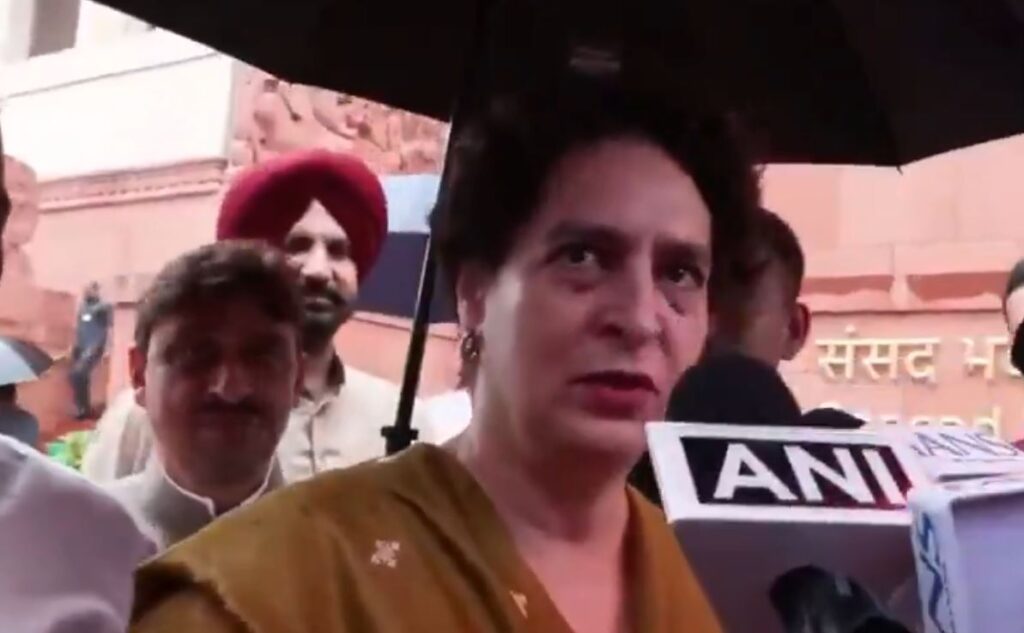
Congress MP Priyanka Gandhi Vadra stated on Tuesday that her brother and Leader of Opposition in Lok Sabha, Rahul Gandhi, met students protesting in Jharkhand. This assertion came amidst escalating political tensions over the student agitation that has gripped Parliament in recent days.
Priyanka Gandhi made her comments upon her arrival at Parliament, where National Democratic Alliance (NDA) MPs staged a protest, accusing the Opposition of evading crucial discussions. The atmosphere was charged as both sides exchanged barbs over the ongoing protests.
“Rahul Gandhi has met the students from Jharkhand,” Priyanka Gandhi Vadra declared, highlighting her brother’s commitment to addressing student concerns. Her statement underscores the Congress party’s strategy to champion the voices of students amidst this political confrontation.
The Congress leader criticized the ruling party for staging a counter-protest within the Parliament complex, a rare occurrence that she suggested indicated the effectiveness of the Opposition’s stance. “For the first time, I have seen that the MPs of the ruling party are holding a protest. At least we have forced them to do this,” she stated.
Priyanka Gandhi further called upon Union Home Minister Amit Shah to step forward and provide a statement to the House, urging transparency regarding the government’s position on the ongoing student agitation. “Now he (Amit Shah) should come and give a statement,” she insisted, emphasizing the need for accountability.
The backdrop of these events features a growing student movement in Jharkhand seeking justice for various issues, including access to education and employment opportunities in the region. The Congress party aims to capitalize on this discontent by reinforcing its ties with the student community while challenging the ruling party in Parliament.
The protests in Jharkhand have gained momentum, drawing attention not just locally but across India. Activists and students alike demand that their grievances be heard, amplifying calls for reform and greater investment in education.
As the standoff continues, the sharp exchanges between Congress and NDA MPs reflect deepening political divides. With each side mobilizing their base, the dynamic in Parliament is likely to remain contentious in the coming days.
In response to her comments, NDA leaders have accused the Congress of using student protests for political mileage rather than prioritizing dialogue and resolution. This back-and-forth illustrates the complexity of political discourse in India, where student activism and parliamentary dynamics often intertwine.