Mehbooba Mufti Critiques Modi’s ‘Forgive Youth’ Message
In a strong response to PM Modi’s video urging forgiveness for youth protests, Mehbooba Mufti highlights the stark contrast in opportunities for Generation Z in India.
 YT News
0 comments

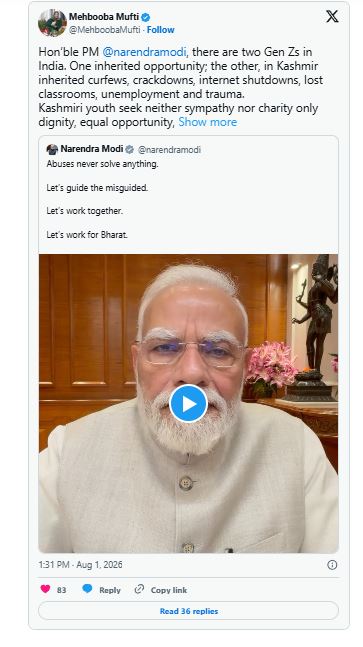
Peoples Democratic Party (PDP) chief Mehbooba Mufti has expressed her concerns regarding Prime Minister Narendra Modi’s message encouraging forgiveness for youth who protested. In a poignant statement, she highlighted the contrasting realities facing India’s Generation Z, particularly those residing in Kashmir.
During a video shared on social media platform X, PM Modi addressed the need for compassion towards youth who displayed disrespect during protests at Jantar Mantar. In response, Mufti articulated, “Hon’ble PM @narendramodi, there are two Gen Zs in India. One inherited opportunity; the other, in Kashmir, inherited curfews, crackdowns, internet shutdowns, lost classrooms, unemployment and trauma.”
Mufti emphasizes that Kashmiri youth do not seek sympathy or charity. Instead, they yearn for equal opportunities and the freedom to aspire without fear. “Kashmiri youth seek neither sympathy nor charity, only dignity, equal opportunity, political space, and the freedom to dream without fear,” she stated, reflecting the aspirations of countless young individuals in the region.
The PDP leader’s remarks underscore the ongoing struggles faced by the youth in Jammu and Kashmir, who are often mired in a cycle of conflict and limited resources. Her call for recognition of the disparities between regions within India serves as a poignant reminder of the urgent need for equitable opportunities.
Mufti urged that if true compassion is to define India’s future, it must begin with addressing the challenges faced by the youth in Kashmir. The sentiment aligns with growing concerns of socio-economic inequalities that persist across various parts of India.
The geopolitical landscape of Kashmir continues to weigh heavily on its inhabitants, particularly the younger generation who are affected by ongoing instability and violence. As discussions around youth empowerment gain traction, Mufti’s remarks serve to highlight the necessity of inclusive development policies that consider regional discrepancies.
The PDP’s stance on youth issues reflects a broader discourse on how government policies and political narratives shape the lived experiences of young people nationwide. With calls for engagement and genuine opportunities, the voice of the youth, particularly in Kashmir, seeks to resonate within the corridors of power in New Delhi.
In the wake of these developments, it remains essential for policymakers to listen to the aspirations of the younger demographics across India. Engagement through open dialogue and constructive reforms could pave the way for a brighter future.