Innovative Cancer Control Workshop Shines Light on Jammu’s Health Needs
A significant workshop on cancer prevention held in Jammu aims to strengthen screening and survival strategies for breast, oral, and other cancers in the region, supported by ICMR experts.
 YT News
0 comments
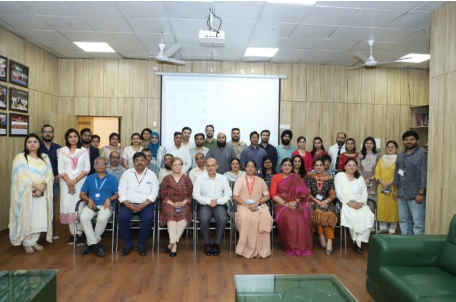
Jammu, October 8, 2026: Government Medical College (GMC) Jammu, in collaboration with the Indian Council of Medical Research (ICMR), organised a vital two-day workshop focused on breast cancer prevention and screening across Jammu & Kashmir and Ladakh on October 7 and 8, 2026. The initiative gathered healthcare professionals, researchers, and key decision-makers to craft actionable strategies for improving cancer care delivery in this underrepresented region.
This workshop significantly addressed the urgent need for early detection and timely treatment of various cancers, notably breast, oral, cervical, and gastric cancers. By pooling knowledge and expertise, the initiative sought to implement practical, evidence-based solutions essential for enhancing the region’s cancer care framework.
Innovative Cancer Care Strategies
Under the guidance of Dr. Ashutosh Gupta, Principal of GMC Jammu, and leading oncologists from ICMR, the workshop explored the challenges faced in health interventions and programmes. Dr. Jyotsna Suri, HOD Pathology and Nodal Officer at GMC Jammu, along with a team of ICMR experts, emphasized creating health initiatives that cater specifically to local needs.
Another focus of the workshop was improving data management practices. Dr. Pulkit Verma from ICMR Headquarters presented on the RED Cap platform, highlighting its role in enhancing data collection and monitoring, critical for evaluating healthcare interventions.
Strategies for Breast Cancer Survival
One of the workshop’s pivotal points revolved around designing a proposal to enhance breast cancer survival rates in Jammu & Kashmir. Experts aimed to identify systematic gaps in awareness, detection, and treatment pathways that hindered effective breast cancer management. The collaborative discussions opened avenues for tailored interventions that promise to have a considerable impact on patient outcomes.
Linking the dots in cancer care, the workshop also introduced a comprehensive strategy for population-level screening of major cancers. Participants examined ways to identify high-risk individuals while optimizing available health-system resources to strengthen early detection initiatives.
Collaboration Between ICMR and GMC Jammu
The event highlighted the significance of collaborative efforts between national research bodies and local healthcare professionals. The productive interaction fostered by the workshop depicted a commitment to improving cancer care services through shared insights and multidisciplinary collaboration.
As experts and officials from the UT administration gathered, the discussions became a stepping stone towards formulating robust evidence-based proposals to support cancer prevention and care across Jammu & Kashmir and Ladakh regions.
A Roadmap for the Future
The workshop will lay the groundwork for several key outcomes including:
- Strengthening awareness and prevention activities regarding cancer.
- Advancing population-based screening efforts for primary cancers.
- Facilitating early detection alongside timely diagnosis.
- Enhancing patient referral systems and care pathways.
- Improving treatment strategies to boost breast cancer survival rates.
- Creating adaptable intervention packages rooted in local data.
- Establishing effective monitoring through digital data platforms.
- Generating actionable evidence for future cancer control initiatives.
- Fostering coordination among health institutions, government, and research organizations.
A Significant Leap Toward Enhanced Cancer Care
This workshop, spearheaded by ICMR, represents a transformational step in formulating a comprehensive and locally resonant cancer-control strategy for Jammu & Kashmir and Ladakh. The objective remains clear: to enable early cancer detection, facilitate timely access to care, and ultimately improve the quality of life for cancer patients in these regions. By uniting research, clinical expertise, and administrative leadership, this initiative aims to transform cancer care practices into tangible community benefits.